

The Biosphere Trap: Why "Easy" Growth is a Death Sentence
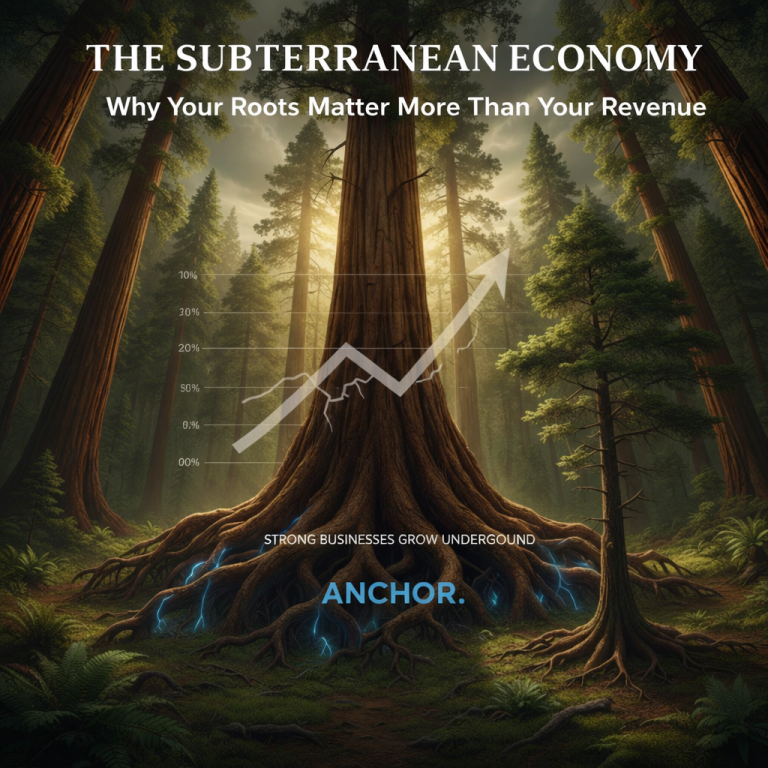
In the 1990s, scientists built a “Biosphere” in the Arizona desert—a perfect, enclosed ecosystem. The trees inside grew faster than any on Earth.
But then, something strange happened.
Before the trees even reached maturity, they simply collapsed under their own weight. They didn’t die of disease or drought. They toppled because they were missing one critical ingredient: The Wind.
Without the constant stress of the wind pushing against them, these trees never developed “stress wood.” They never felt the biological trigger to send their roots deep or thicken their bark. Because they were never challenged, they were structurally hollow.
They were “greenhouse giants”—tall, impressive, and completely fragile.
The “Stress Wood” Principle
Trees don’t grow deep roots because they want to. They do it because they must.
When the wind hits a tree, it creates microscopic fractures in the fiber. The tree responds by sending nutrients downward, anchoring its roots into the bedrock and hardening its core. This “reaction wood” is denser and more resilient than anything grown in a calm climate.
Your “hard seasons” are your wind. When the market shifts, when rates spike, or when margins tighten, your business is being given a biological command: Anchor or Topple. The pressure isn’t a threat to your growth; it is the requirement for your longevity.
The Redwood Lesson: Intertwined for Survival
But even the deepest roots have a limit. This is where the Great Redwoods teach us the second half of the lesson.
Redwoods are the tallest living things on Earth, yet their roots are surprisingly shallow. How do they survive centuries of Pacific storms? They don’t grow alone.
Their roots grow outward, intertwining with the roots of the trees around them. They lock into one another. When the wind hits one tree, the entire grove holds it up.
- A lone redwood is a target.
- A grove is a fortress.
The “Subterranean” Audit
To see if you’re building a Biosphere business or a Redwood empire, look below the surface:
- The Stress Test (Individual Depth) When the “wind” hits your revenue, do you scramble for a quick fix, or do you use the friction to harden your systems? Build “stress wood” by using every market dip to refine your sales process and cut the bloat. If it doesn’t challenge you, it won’t change you.
- The Connectivity Test (Collective Width) Are your roots isolated or intertwined? Look at your referral partners, your team, and your advisors. True stability comes from interdependence. If your partners succeed when you succeed—and feel the wind when you feel the wind—you are unshakeable.
- The Canopy Check (Structural Integrity) Is your “above-ground” growth (overhead, ego, staffing) outstripping your foundation? Never let the leaves get heavier than the roots can support. Scale your systems before you scale your reach.
The Bottom Line
Don’t pray for a calm market. A calm market makes for weak wood.
The most formidable companies weren’t built during the boom; they were tempered during the gale. They used the pressure to force their roots deeper into the ground and wider into the community.
Stop trying to stand alone. Start growing underground.
By Dino Katsiametis Founder, Ethos Lending | Host, The Way Podcast